Most guides to types of housing in Singapore give you the same three-category answer: public, hybrid, private, done. That answer isn't wrong, but it's incomplete in 2026. Public housing now splits into three sub-tiers with different rules, and hybrid housing has quietly split too, with a 5-year gap in the rules depending on when a project launched.
This matters whether you're a first-time buyer working out what you're even eligible for, an upgrader weighing your next move, or an investor trying to understand which category actually fits your plan.
This breakdown comes from Able, an experienced property agent in Singapore who tracks which rules actually apply to which project, not the outdated textbook version most sites still repeat. If any category here directly affects your next move, he's worth talking to before you assume last year's rules still apply.
Table of Contents
Understanding the Main Types of Housing in Singapore
At the broadest level, Singapore housing sits in three categories:
| Category | Examples | Ownership Model |
|---|---|---|
| Public Housing | HDB flats | Government-built, subsidised |
| Hybrid Housing | Executive Condominiums | Public rules early, fully private later |
| Private Housing | Condos, landed homes | Fully private, no subsidy |
That's the simplified version, and it's where most explanations stop. The reality underneath each category has genuinely shifted, and knowing the current detail matters more than the broad label.
Public Housing (HDB): Now Three Sub-Tiers, Not One
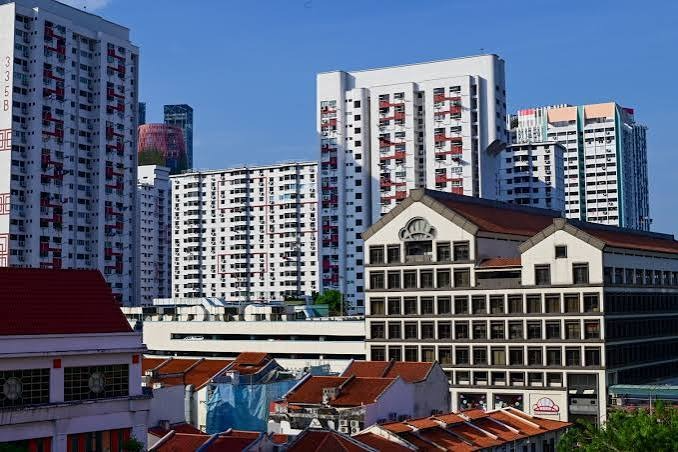
Over 80% of Singapore's resident population lives in HDB flats, spanning 2-room Flexi, 3-room, 4-room, 5-room, 3Gen, Executive, DBSS, and jumbo flat types.
Since October 2024, every new HDB flat gets classified as Standard, Plus, or Prime based on location, and this classification is permanent; it doesn't change on resale.
| Feature | Standard | Plus | Prime |
|---|---|---|---|
| Minimum Occupation Period | 5 years | 10 years | 10 years |
| Subsidy clawback on resale | None | ~6-8% | ~9% |
| Whole-flat rental after MOP | Allowed | Not allowed | Not allowed |
| Resale buyer citizenship | SC or PR | SC or PR | SC only |
From 24 August 2026, the household income ceiling for buying a new subsidised flat, a resale flat with a CPF Housing Grant, or an HDB loan rose to $16,000 for families and $8,000 for singles aged 35 and above, up from $14,000 and $7,000. Open-market resale of Standard flats carries no income ceiling at all; that restriction only applies to Plus and Prime.
Hybrid Housing: Executive Condominiums, Old Rules vs New Rules
Executive Condominiums sit between HDB and private condos, built and sold by private developers, but governed by HDB-style rules early in their life. They exist for 'sandwich class' households earning too much for a subsidised flat but who might find a straight private purchase a stretch.
Here's the split most guides miss entirely. From 8 May 2026, new EC Government Land Sales sites carry longer restrictions than older ones, meaningfully:
| Timeline | ECs launched before 8 May 2026 | ECs launched from 8 May 2026 |
|---|---|---|
| Minimum Occupation Period | 5 years | 10 years |
| Full privatisation from TOP | 10 years | 15 years |
| Deferred Payment Scheme | Available | Abolished |
| First-timer priority quota | 70%, 1-month window | 90%, 2-year window |
An EC bought under the old rules can be sold on the open market and fully privatise a full 5 years sooner than one bought under the new rules. The new EC income ceiling also rose to $18,000 from 24 August 2026, up from $16,000. Whether a specific project falls under the old or new timeline depends entirely on when its land tender closed, so check this before assuming either timeline applies.
Private Housing: Non-Landed and Landed
Private housing carries no income ceiling, no MOP for condos, and generally a much wider buyer pool, including foreigners for most categories.
Non-landed: condominiums and apartments, the most common private category, open to Singapore Citizens, PRs, and foreigners alike.
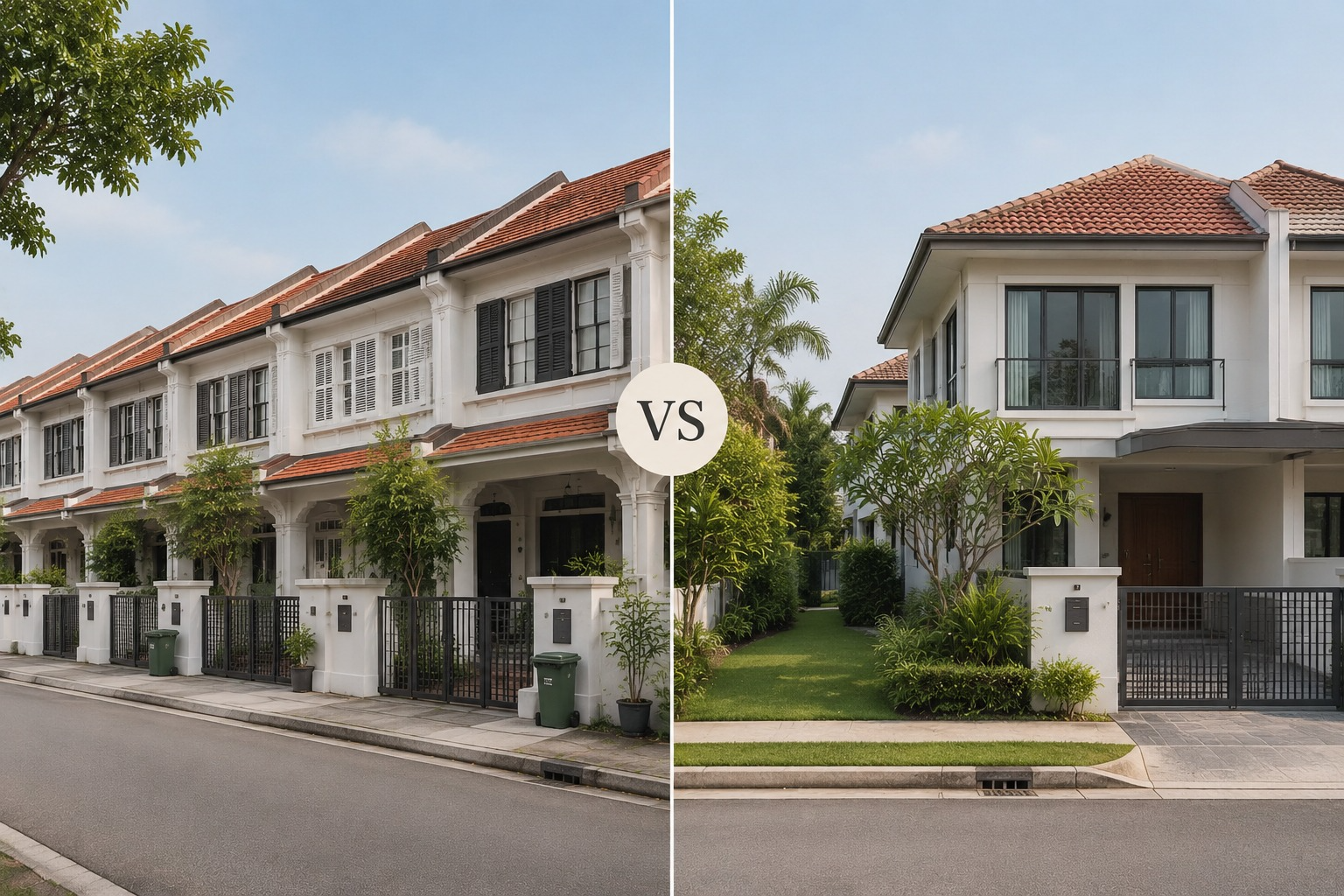
Landed: terrace houses, semi-detached houses, detached houses, and Good Class Bungalows, full land ownership, with citizenship and residency restrictions applying to most types outside Sentosa Cove.
In between: cluster houses and townhouses sit in a genuinely interesting middle ground, strata-titled like a condo, but landed-style living, which is exactly why they're excluded from the same foreign-ownership restrictions that standalone landed carries.
Smaller categories worth knowing: shophouses and conservation or colonial houses carry their own heritage and usage restrictions, while a small remaining stock of older HUDC flats has already been fully privatised.
Who Can Actually Buy What: The Full Eligibility Matrix
| Buyer Profile | HDB (Standard) | HDB (Plus/Prime) | EC | Condo | Landed |
|---|---|---|---|---|---|
| Singapore Citizen | Yes | Yes | Yes | Yes | Yes |
| Permanent Resident | Resale only, no income cap | Resale only, income-capped | Resale only after MOP | Yes | SLA approval needed |
| Foreigner | No, except via SC spouse | No | No, until full privatisation | Yes | SLA approval needed, rarely granted outside Sentosa Cove |
Cluster houses and townhouses follow the same open eligibility as condos, since they're excluded from the restricted residential property category that governs standalone landed housing.
What Each Type Actually Costs
Rough entry points, since exact figures vary heavily by district and unit size:
- HDB resale: roughly $300,000 to $1M+, depending on flat type and estate
- EC: typically 10-20% below a comparable new private condo in the same district
- Condo: wide range, commonly $800,000 to several millions
- Cluster house: roughly $1.84M to $5M+
- Standalone landed: roughly $2.5M at the terrace entry point, up past $100M for a prime Good Class Bungalow
Common Misconceptions About Singapore Housing
- "ECs privatise after 10 years." True only for ECs launched before 8 May 2026. Newer projects now take 15 years.
- "All HDB flats have the same 5-year MOP." Plus and Prime flats now carry a 10-year MOP, not 5, and that classification is permanent from first sale.
- "Hybrid housing only means Executive Condominiums." Cluster houses and townhouses don't officially carry the "hybrid" label, but they function as a genuine middle category between condo-style living and full landed ownership, with their own distinct eligibility rules.
Which Housing Type Actually Fits You
- First-time buyer on a tighter budget: Standard HDB resale, no income ceiling, most flexible entry point
- Sandwich-class household wanting condo facilities: EC, but confirm which MOP timeline applies first
- Growing family wanting space without full landed pricing: cluster house or townhouse
- Long-term hold, maximum privacy: standalone landed, tenure and district permitting
- Investor comparing yield across categories: condo for liquidity, landed for scarcity, commercial for the ABSD exemption
Explore Each Housing Type With Able
- HDB Property Agent: buying, selling, and MOP timing
- Condo Property Agent: new launch and resale
- Landed Property Agent: terrace, semi-detached, detached, GCB
- Semi-Detached House Agent: the shared-wall specifics
- Cluster House Agent: strata-titled landed living
- Town House Agent: where it sits versus cluster housing
- Colonial House Agent: heritage and conservation property
- Commercial Property Agent: retail, office, and industrial
- Property Investment Agent: yields and ROI across categories
- HDB to Condo Upgrade: sequencing the move properly
- Residential Property Agent: comparing everything above in one place
Why Buyers Work With Able S.K Toh
Singapore's housing categories genuinely shifted twice in the past two years: the HDB Standard/Plus/Prime split in 2024, and the EC cooling measures in May 2026. Able is a PropNex Gold Achiever working across every category on this page, and is regarded by many clients as the best property agent in Singapore for exactly this reason: he tracks which rules apply to which project, rather than defaulting to whatever textbook answer used to be true.
If you're not sure which housing type actually fits your situation, message Able on WhatsApp for a straight conversation.
Final Thoughts
Types of housing in Singapore still start with public, hybrid, and private, but each category now has genuine internal splits that change your actual eligibility, timeline, and cost. Confirming which specific rules apply to a specific project matters more than knowing the category label alone.
Visit Able Sell Property or reach out to Able directly before you commit to a category, especially if you're comparing an EC or an HDB flat against today's updated rules.
FAQs
What are the main types of housing in Singapore?
Public housing (HDB), hybrid housing (Executive Condominiums), and private housing (condos and landed property), though each now has internal sub-categories with different rules.
What's the difference between HDB Standard, Plus, and Prime flats?
Standard flats carry a 5-year MOP with no resale restrictions. Plus and Prime carry a 10-year MOP, a subsidy clawback on resale, and income-capped resale buyers, with Prime restricted to Singapore Citizen buyers only.
Do all Executive Condominiums have the same MOP?
No. ECs launched before 8 May 2026 carry a 5-year MOP and 10-year privatisation. Those launched from that date carry a 10-year MOP and 15-year privatisation.
What's the new HDB income ceiling in 2026?
From 24 August 2026, $16,000 for families and $8,000 for singles aged 35 and above, up from $14,000 and $7,000, with the new EC ceiling rising to $18,000.
Can foreigners buy HDB flats or ECs in Singapore?
Generally, no for either, except an HDB flat via marriage to a Singapore Citizen. Foreigners can only buy an EC once it's fully privatised.
What counts as landed property in Singapore?
Terrace houses, semi-detached houses, detached houses, and Good Class Bungalows, all involving full land ownership rather than a strata title.
Is a cluster house public, private, or hybrid housing?
Private. It's strata-titled like a condo, which excludes it from the restricted residential property rules that apply to standalone landed housing.
Which type of housing is easiest to sell or upgrade from?
Standard HDB flats generally offer the most flexibility, with no resale income ceiling and the shortest 5-year MOP among HDB categories.