Cluster house prices in Singapore range from around $1.84 million at the affordable end to well past $5 million in prime districts like Bukit Timah. That's a wide spread for one property category, and where you land on it depends on district, tenure, and how new the development is.
This matters if you want landed-style space without the full landed price tag. Cluster houses sit in a genuine middle ground, but the numbers only make sense once you look past the purchase price alone.
This breakdown is put together by Able, a cluster house agent in Singapore who's walked buyers through exactly these trade-offs: price, eligibility, and long-term appreciation, before they commit to anything.
Cluster House Prices by District: The Real Numbers
Cluster house prices in Singapore vary meaningfully by district, and psf is the clearest way to compare across different-sized units. Able tracks these numbers closely at Able Sell Property, since a headline average can hide a lot of variation within the same district.
| District | Price Range (psf) | Character |
|---|---|---|
| Bukit Timah / Sixth Avenue | $1,700 to $2,000 | Prime, mostly freehold, landed enclave |
| Serangoon / Lorong Chuan | $1,400 to $1,700 | Popular with families, central access |
| Yio Chu Kang / Upper Thomson | $1,300 to $1,500 | Spacious, quieter, often undervalued |
| Hougang / Punggol | $1,100 to $1,300 | Newer leasehold builds, more affordable |
At the affordable end, cluster terraces start around $1.84 million. Prime freehold units in Districts 9 and 4, including waterfront developments near Sentosa Cove, average $4.3 million to over $5 million depending on the specific project.
Why Cluster Houses Cost 15-25% Less Than Standalone Landed
Cluster houses run 15 to 25% cheaper than standalone landed equivalents in the same area, and the reason comes down to what you're actually buying.
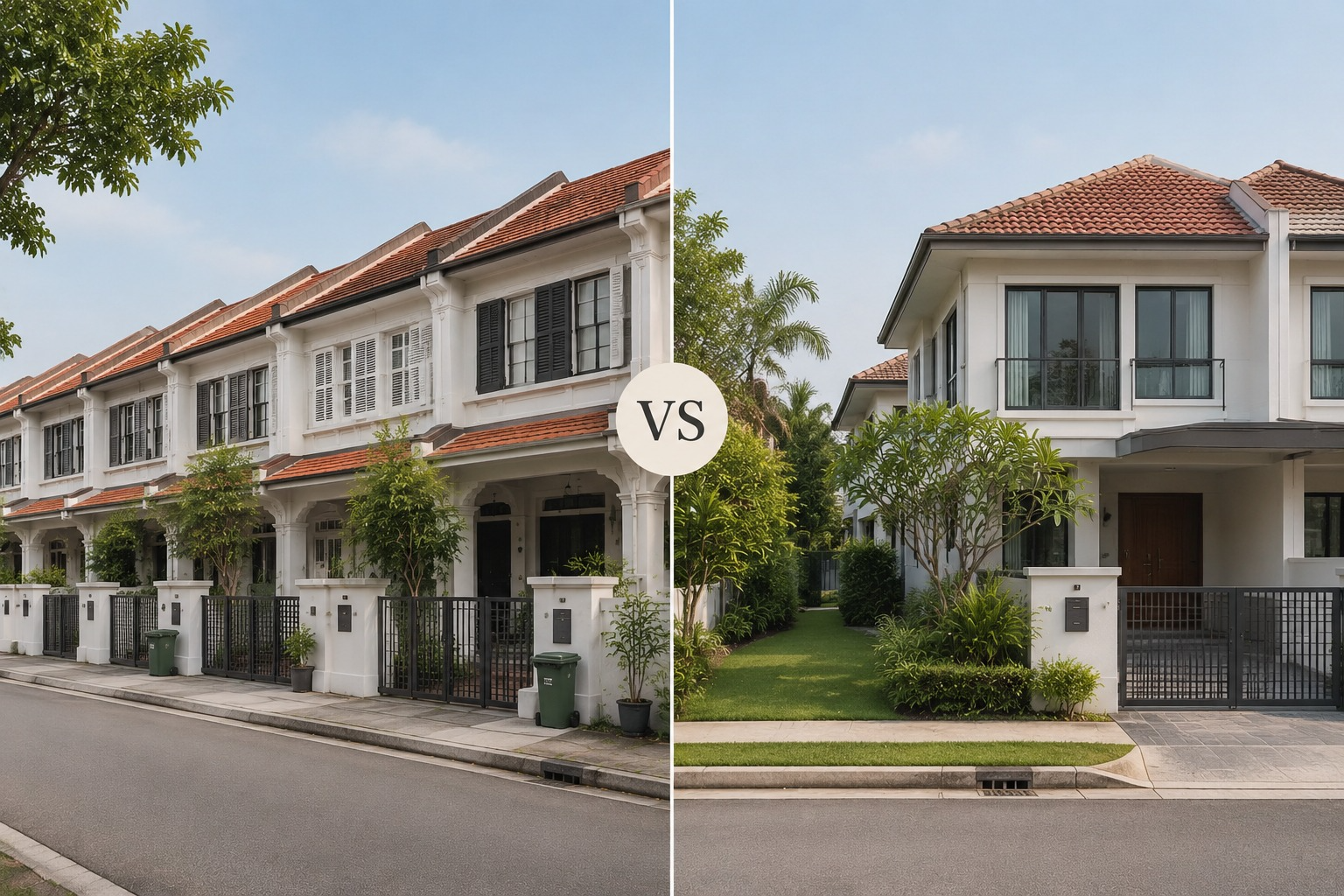
A standalone landed property gives you the land itself under a freehold or leasehold land title. A cluster house gives you a strata title; you own your unit outright, but the underlying land is shared and managed collectively through an MCST, similar to a condo. That shared structure is what keeps the entry price meaningfully lower than a comparable standalone terrace or semi-detached home nearby.
Tenure widens the gap further. Freehold cluster developments in prime enclaves like Bukit Timah command a real premium over leasehold projects, sometimes running several hundred dollars more per square foot for otherwise comparable units. If a long-term hold is your plan, tenure is worth weighing as carefully as location.
The Legal Reason Foreigners Can Buy Cluster Houses
Here's a detail most price guides skip entirely, and it's genuinely useful if you're a foreigner or PR comparing cluster houses against standalone landed property.
The Residential Property Act restricts foreigners and PRs from buying standalone terrace houses, semi-detached houses, detached houses, and Good Class Bungalows without Singapore Land Authority approval, the same restriction we've covered in our guide on buying landed property in Singapore. Cluster houses are explicitly excluded from that restricted category. Because each unit sits on a strata title rather than a land title, it simply falls outside the RPA's definition of restricted residential property.
Practically, that means a foreigner who can't get approval for a standalone bungalow can often buy a cluster house in the same neighbourhood without any special approval process at all. This is exactly why cluster houses attract a meaningful share of expat buyers who want landed-style space but don't want to navigate SLA approval. The wider rulebook is covered in our guide on whether foreigners can buy property in Singapore.
Who Actually Buys Cluster Houses in Singapore
Understanding cluster house prices in Singapore only tells half the story; knowing who this property type actually suits helps you decide if it's worth pursuing at all.
Families upgrading from a condo often land here first. They want more space and a landed feel without jumping straight to a $6 to $8 million standalone terrace. Expats relocating to Singapore make up another significant share, partly because of the foreign-ownership access covered above, and partly because cluster living offers a middle ground between the detached houses common in many Western countries and the tighter, more communal setup of a typical Singapore condo.
A smaller group buys specifically as a stepping stone, the plan being to build equity here, then move up to a standalone landed once finances allow. Given the appreciation gap covered further down, that plan works better as a lifestyle upgrade than a pure wealth-building strategy, so go in with the right expectations for the category you fall into.
ABSD, Stamp Duty, and Financing a Cluster House
Cluster houses are taxed the same way as any other private residential property. Singapore Citizens pay 0% ABSD on a first purchase, 20% on a second, and 30% on a third. PRs pay 5% on the first, 30% on the second. Foreigners pay a flat 60%, regardless of how many properties they already own.
Buyer's Stamp Duty applies progressively on top of that. On a $3,500,000 cluster house, BSD alone runs into the mid-five figures once calculated across the tiered bands.
Financing works exactly like a standard private property loan. Cluster houses are eligible for CPF usage and standard bank mortgages, including the same major lenders used for condo and landed purchases. There's no special financing category or restriction here; the loan process looks identical to buying a condo of similar value.
The Trade-Off Nobody Mentions: Slower Appreciation
Purchase price is only half the picture when weighing cluster house prices in Singapore against a standalone landed alternative. Over the past 5 years, cluster homes in Bukit Timah appreciated at roughly 0.92% annually, compared to 7.87% for standalone landed property in the same area. That's a significant gap, and it's the part most price-focused content leaves out entirely.
There's a nuance worth weighing against that number, though. New cluster house developments are genuinely rare; developers rarely build new ones given the niche demand, which means existing supply isn't growing. Slower historical appreciation paired with shrinking future supply is a mixed signal, not a purely negative one. If you're buying for long-term capital growth specifically, go in with realistic expectations rather than assuming cluster houses track standalone landed price growth.
MCST Fees: The Recurring Cost That Changes the Real Price
Monthly MCST fees typically run from $250 to $700, depending on the development's facilities and unit type, covering pool, gym, security, and common area upkeep that a standalone landed owner would otherwise manage and pay for independently.
Factor this into your real cost of ownership, not just your down payment and loan repayment. On a 10-year hold, MCST fees alone can add up to a meaningful five-figure sum most buyers don't budget for upfront.
Cluster House vs Condo vs Standalone Landed
Numbers side by side make the trade-offs clearer than reading each factor in isolation.
| Factor | Cluster House | Condo | Standalone Landed |
|---|---|---|---|
| Typical entry price | $1.84M to $5M+ | Wide range by district | $2.5M to $100M+ |
| Foreign buyer access | Open, no approval needed | Open, no approval needed | Restricted, needs SLA approval |
| 5-year appreciation (Bukit Timah) | ~0.92% annually | Varies by district | ~7.87% annually |
| Monthly fees | $250 to $700 | Often higher, more facilities | Self-managed, no MCST |
| CPF and bank financing | Standard, same as condo | Standard | Standard |
| Renovation flexibility | Limited, MCST approval needed | Limited, MCST approval needed | High, subject to URA rules |
Is a Cluster House Worth It as a Rental Investment?
Average cluster house rental sits around $3.14 psf, positioned between condos at roughly $5.18 psf and standalone landed at around $3.55 psf. Rental volume is modest too, with only a few hundred units renting out annually across the whole segment.
That combination, a mid-tier rental rate with low liquidity, makes cluster houses a niche rental play rather than a straightforward yield-chasing investment. They tend to suit owner-occupiers and long-term holders more than active landlords when comparing yields across property types.
Why Buyers Work With Able S.K Toh
Cluster houses sit in a genuinely underexplained category, with different rules from both condo and standalone landed, and most agents outside this niche gloss over the details that actually matter. Able is an experienced Property Agent in Singapore, a PropNex Gold Achiever, with dedicated experience in cluster house transactions and walks buyers through eligibility, ABSD, and MCST costs before they commit, not after.
If you're weighing cluster house prices in Singapore against condos or standalone landed for your specific situation, contact Able for a straight read on the numbers.
Get a Free, No-Obligation Valuation
Chat with Able S.K Toh directly on WhatsApp, or call the number below.
Final Thoughts
Cluster house prices in Singapore land in a real middle ground, 15 to 25% below standalone landed, with the same shared-facility convenience as a condo. The trade-off is slower historical appreciation and a smaller resale pool, both worth knowing before you commit.
Visit Able Sell Property or reach out to Able directly if you want a clearer read on where a specific cluster development actually sits.
FAQ
How much does a cluster house cost in Singapore?
Prices range from around $1.84 million at the affordable end to over $5 million in prime districts like Bukit Timah, depending on tenure and development age.
Why are cluster houses cheaper than standalone landed property?
Cluster houses hold a strata title rather than a land title, with shared land managed through an MCST, which keeps entry prices 15 to 25% below comparable standalone landed homes.
Can foreigners buy a cluster house in Singapore?
Yes, without special approval. Cluster houses are excluded from the Residential Property Act's restricted category since they're strata-titled, unlike standalone landed property.
Do cluster houses appreciate as well as landed property?
Historically, no. Cluster homes in Bukit Timah appreciated around 0.92% annually over 5 years, versus 7.87% for standalone landed in the same area.
What are typical MCST fees for a cluster house?
Roughly $250 to $700 a month, depending on the development's facilities and unit size.
Is a cluster house a good rental investment?
It's a niche option. Rental rates sit between condo and landed, but rental volume is low, making it better suited to owner-occupiers than active landlords.