A townhouse investment in Singapore can make sense for the long term, but it is not automatically a good investment just because the property offers more space. The location, purchase price, tenure, rental demand, ownership structure, ongoing costs, and resale market all matter.
Townhouses can appeal to buyers who want more space and privacy than a typical condo. They can also attract families looking for a landed-style home without buying a standalone landed property. But before investing, you need to look beyond the marketing description and understand exactly what you are buying.
Is a Townhouse a Good Investment in Singapore?
It can be, especially when the property has strong fundamentals and a sensible price. Townhouse investment in Singapore is not the same for every property. Townhouses can have different ownership and planning structures, with some forming part of condo developments and others falling under strata landed housing.
URA has specific planning guidelines for strata landed housing, including strata terrace housing. The actual development and its approved status matter more than the label used in a property listing. For a long-term investor, the better question is not simply, "Are townhouses a good investment?"
It is: Does this particular townhouse have the location, price, rental demand, and resale potential to justify the investment?
That is where proper property analysis becomes important.
Why Townhouses Can Be Attractive for Long-Term Investment
More Space and Privacy
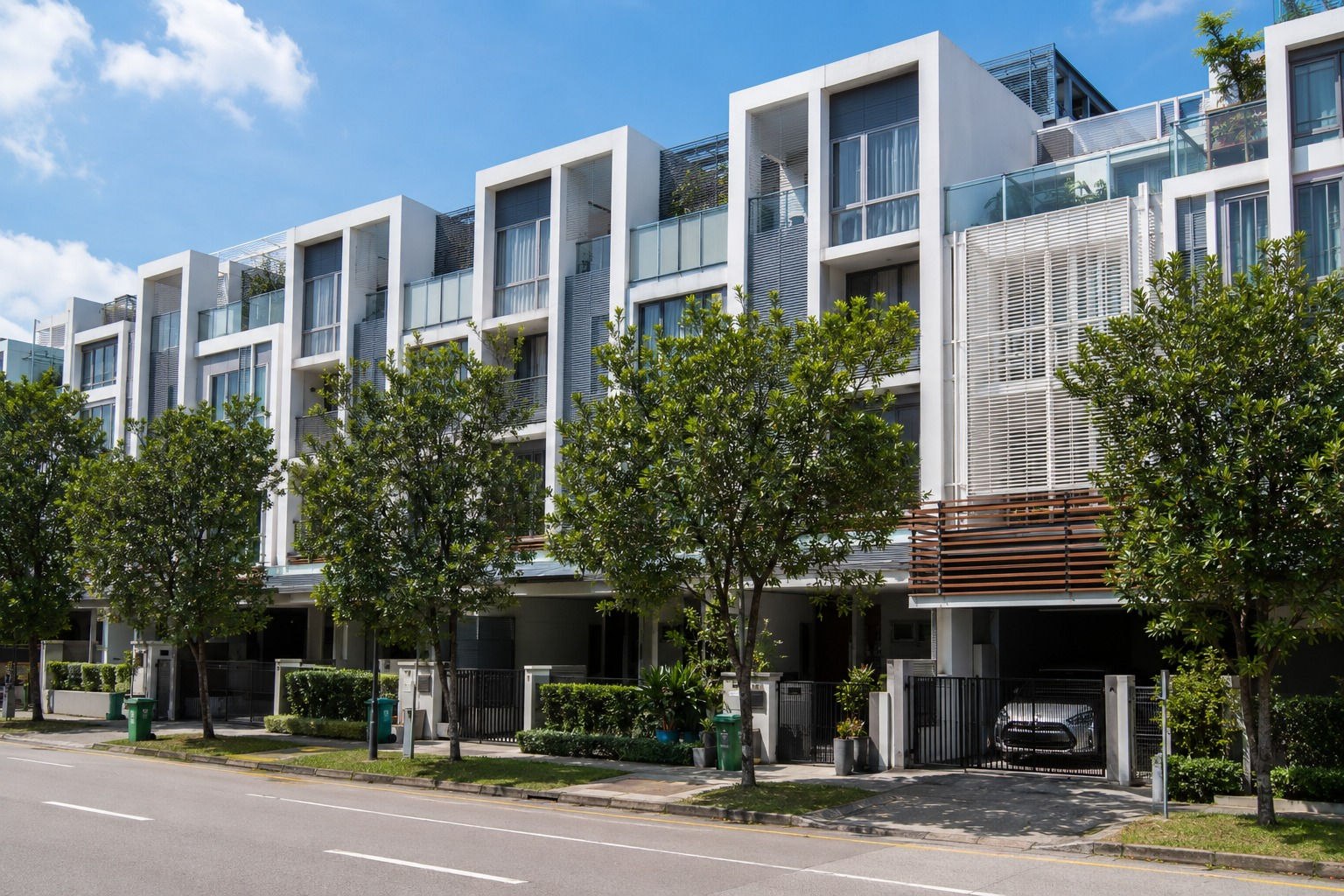
One of the biggest advantages of a townhouse is space. Many townhouse layouts offer multiple floors, larger living areas, and a stronger sense of privacy than a conventional apartment. Some developments may also provide private outdoor areas or direct access arrangements.
That can make them attractive to families who have outgrown an apartment but are not ready to buy a standalone landed home. For investors, this matters because the property appeals to a specific group of tenants and buyers who value space. The right townhouse can stand out from standard condo units competing in the same area.
Landed-Style Living Without a Standalone House
Townhouses sit somewhere between conventional condominium living and standalone landed housing.
You may get:
- Multiple levels
- More internal space
- Greater privacy
- A private entrance
- Outdoor space in some developments
- Access to shared facilities in some projects
But you should not assume that every townhouse provides the same benefits. The exact development matters. Shared facilities, maintenance arrangements, title structure, and private space can differ significantly.
Potential Rental Demand
A townhouse can work as a rental investment when there is a strong tenant market for larger homes in the area. Families, senior professionals and some expatriate households may prefer larger properties with more privacy and usable living space. But rental demand should not be assumed from the property's size alone.
Before buying, look at:
- Actual rents achieved by similar units
- Nearby competing properties
- MRT and transport access
- Schools and amenities
- Employment centres
- Unit layout
- Parking
- Furnishing
- Condition of the property
A large townhouse in a poorly connected location can be harder to rent than a smaller property in a stronger location.
Potential for Long-Term Capital Growth
Capital appreciation is another reason investors consider townhouses. But a townhouse does not appreciate simply because it is a townhouse. Long-term value is influenced by factors such as:
- Location
- Land scarcity
- Tenure
- Remaining lease
- Development quality
- Purchase price
- Nearby infrastructure
- Supply of competing properties
- Future buyer demand
Singapore's private residential market also contains very different sub-markets. A prime townhouse, suburban strata property and family-oriented development can behave very differently.
So do not base an investment decision on a broad statement like "Singapore property always goes up." Look at the specific development and its transaction history.
The Risks of Townhouse Investment in Singapore
Townhouses have advantages, but there are some risks buyers should not overlook.
Property Classification Can Be Complicated
This is one of the first things to check. A property being advertised as a "townhouse" does not tell you everything about its legal or planning status. URA treats strata landed housing as a specific category with its own development guidelines. The exact status of a particular development can affect how the property is treated. This can also affect buyer eligibility.
URA states that non-Singapore citizens need approval from the Controller of Residential Property in the Singapore Land Authority before buying landed houses, including strata landed houses. So if you are buying a townhouse, do not rely only on what an agent listing calls the property. Check the specific development.
MCST Fees Can Affect Your Returns
Some townhouse developments have shared facilities and common areas managed through a management corporation. That can mean ongoing MCST contributions.
These costs may cover things such as:
- Landscaping
- Security
- Common-area maintenance
- Shared facilities
- Building maintenance
- Sinking fund contributions
The amount can vary between developments. This matters for investors because gross rental income is not the same as actual investment return. If a townhouse rents for $8,000 per month, for example, you should not simply multiply that figure by 12 and call it your return.
You also need to account for ownership costs, vacancy periods, property tax, maintenance, financing, and other expenses.
Tenure Matters
Freehold and leasehold properties can attract different buyers. For a leasehold townhouse, you need to consider the remaining lease at the time you expect to sell. A property with a shorter remaining lease may face a different buyer pool than a comparable freehold property.
That does not mean every freehold townhouse is a better investment. A poorly located freehold property can still underperform a well-located leasehold property. The right comparison is always between comparable properties.
The Resale Buyer Pool May Be Smaller
Townhouses appeal to a specific type of buyer. That is both an advantage and a potential risk. A distinctive property can attract buyers who specifically want space and privacy. But there may also be fewer buyers compared with a standard condo unit at a similar price.
Think about your exit strategy before you buy. If you plan to hold the property for ten years, ask: Who is likely to buy this townhouse from me ten years from now?
That question can tell you more than today's listing description.
Upfront Costs Can Change the Investment
Property investment returns need to account for acquisition costs. Buyer's Stamp Duty is payable when buying Singapore property, and IRAS calculates BSD based on the higher of the purchase price or market value. Residential BSD rates currently reach a top marginal rate of 6%.
Depending on the buyer's circumstances, Additional Buyer's Stamp Duty may also apply. Current ABSD rates differ according to factors such as citizenship, residency status and the number of residential properties owned. There can also be legal, financing, renovation, maintenance and other transaction costs.
For an investment purchase, these numbers need to be considered before deciding what price you can afford.
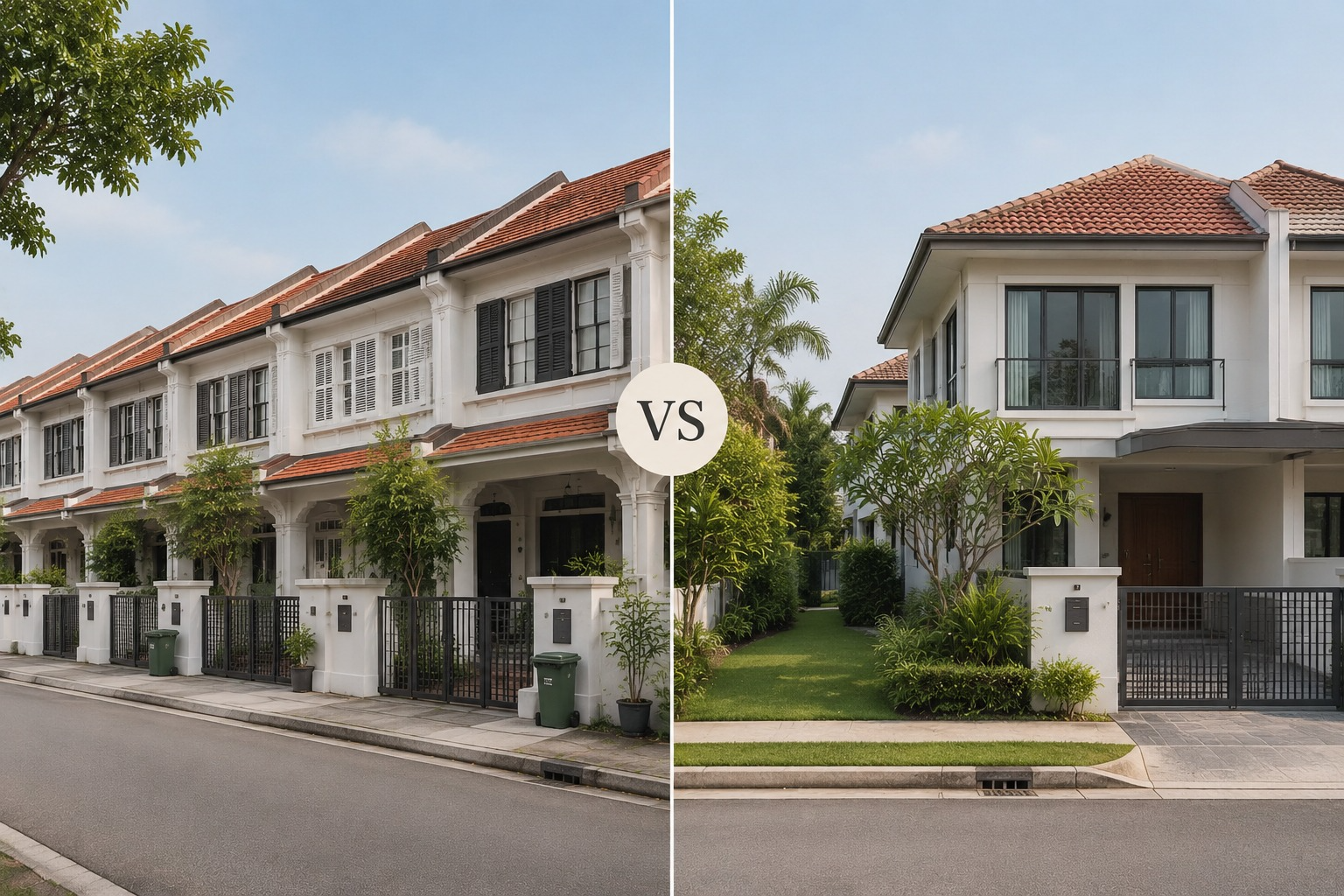
Townhouse vs Condo vs Landed Property
There is not one property type that is best for every investor.
| Factor | Townhouse | Condo | Landed Property |
|---|---|---|---|
| Space | Usually more than a typical condo | Varies | Usually high |
| Privacy | Often high | Varies | Usually high |
| Shared facilities | Depends on development | Common | Usually limited |
| MCST | May apply | Common | Generally not applicable |
| Land ownership | Depends on structure | Generally no individual land ownership | Usually yes |
| Maintenance | Private + possible shared costs | Private + shared costs | Mostly owner-managed |
| Buyer pool | More specialised | Generally broad | More specialised |
| Investment focus | Space, location and niche demand | Location, liquidity and facilities | Land, location and scarcity |
The comparison is not about choosing a winner. A condo may suit someone who values facilities and a wider resale market. A landed property may suit someone who prioritises land ownership and control. A townhouse can sit between those two options.
What to Check Before Buying a Townhouse as an Investment
1. Check the Exact Property Classification
Do not rely on the word "townhouse." Find out how the specific development is classified and understand its title and ownership structure. This is particularly important for buyers who may have eligibility restrictions.
2. Study Recent Transactions
Asking prices are not the same as completed sale prices. Look at recent transactions for:
- The same development
- Similar unit sizes
- Similar layouts
- Similar tenure
- Comparable locations
URA provides private residential property data that can help buyers research prices and transactions. A seller's asking price may tell you what they want. Recent transactions tell you what buyers have actually paid.
3. Calculate the Rental Yield Properly
A simple starting point is:
Gross rental yield = Annual rental income / Purchase price x 100
But that is only the starting point. For a more realistic assessment, consider:
- MCST fees
- Property tax
- Repairs
- Vacancy
- Agent fees
- Insurance
- Financing costs
- Renovation
A townhouse with a higher rent is not necessarily the better investment if its purchase price and ongoing expenses are also much higher.
4. Look at Tenant Demand
Check what similar properties actually rent for. Do not assume a tenant will pay more just because the townhouse is larger. Compare the property with nearby:
- Condos
- Cluster houses
- Landed homes
- Larger apartments
Then ask why a tenant would choose your townhouse over those alternatives.
5. Think About the Exit
A long-term investment needs an exit plan. Consider the likely buyer when you eventually sell. Will the property still appeal to:
- Families?
- Upgraders?
- Owner-occupiers?
- Investors?
- High-income professionals?
Also consider the future competition around the development. A property that is attractive today may face very different competition years later.
When a Townhouse May Not Be the Right Investment
A townhouse may not suit every investor. You may want to consider another property type if you:
- Want the widest possible rental market
- Need maximum rental yield
- Do not want MCST-related expenses
- Want complete control over the land
- Prefer a more straightforward property type
- Are stretching your finances to afford the purchase
- Have not confirmed the property's classification
- Are buying mainly because the property looks attractive
A beautiful home is not necessarily a strong investment. That is an important distinction.
Should You Buy a Townhouse for Investment or Own Stay?
The answer depends on your goal. If you are planning to buy a townhouse as an investment, focus on:
- Purchase price
- Rental income
- Expenses
- Tenant demand
- Capital growth potential
- Resale liquidity
For your own home, lifestyle factors become much more important. You may care more about:
- Space
- Privacy
- Schools
- Commute
- Neighbourhood
- Outdoor space
- Facilities
- Long-term family needs
A townhouse can be a great home without being the highest-return investment. And a property with strong investment numbers may not be the home you actually want to live in.
How a Townhouse Property Agent Can Help You
Buying a townhouse involves more than comparing asking prices. Able S.K Toh is an experienced Property Agent in Singapore, helping buyers assess townhouse prices, recent transactions, ownership structure, rental demand, MCST costs, and potential resale value. This gives you a clearer picture of whether the property fits your investment goals.
If you are considering a townhouse investment in Singapore, Able S.K Toh can guide you through the key details before you commit. From comparing suitable properties to understanding the costs and market value, professional advice can help you make a more informed decision.
Final Verdict: Is Townhouse Investment Worth It in Singapore?
Yes, a townhouse can be a good long-term real estate investment in Singapore. But the property needs to make sense on its own numbers. Look at the location, purchase price, tenure, rental demand, property classification, MCST costs, taxes, and resale market before making a decision. Do not buy simply because a townhouse offers more space or because someone says landed-style properties always appreciate.
If you are comparing a townhouse with a condo, cluster house, or landed property, the right choice depends on your goals and budget. Thinking of buying or selling a townhouse in Singapore? Contact Able Sell Property for expert guidance.
Get a Free, No-Obligation Valuation
Chat with Able S.K Toh directly on WhatsApp, or call the number below.
FAQs
Is a townhouse a good investment in Singapore?
It can be. The investment case depends on the property's location, purchase price, rental demand, tenure, ongoing costs, and future resale demand.
Are townhouses good for rental investment?
They can be, especially in locations where families and other tenants want larger homes. Rental performance depends on the property's location, rent, layout, and competition.
Is a townhouse considered landed property in Singapore?
It depends on the specific development and its planning and ownership structure. The term 'townhouse' alone doesn't determine its classification.
Do townhouses in Singapore have MCST fees?
Some do. Where a townhouse forms part of a strata development with shared common property or management, MCST contributions may apply.
Is a townhouse better than a condo for investment?
Not necessarily. Townhouses can offer more space and privacy, while condos may provide a broader buyer and tenant market. The specific property and numbers matter more than the property label.
What costs should I consider when buying a townhouse?
Consider the purchase price, BSD, applicable ABSD, legal fees, financing, MCST contributions, property tax, maintenance, renovation, and eventual selling costs.
Can foreigners buy a townhouse in Singapore?
It depends on the specific townhouse's classification and development status. Foreign buyers may require approval for certain landed or strata-landed properties.
What should I check before investing in a townhouse?
Check the property's classification, tenure, recent transactions, rental demand, MCST fees, purchase costs, financing, and the likely resale buyer pool before making an offer.